Perspective Fundamentals. Part four: Horizons:
But how do we find a vanishing point?
If you've studied perspective before then you'll know that all lines that parallel with the ground will have their vanishing points on the horizon. Let's figure out why.
If you try to measure every angle parallel to the ground from your station point you will get a flat plane. And when a flat plane intersects another flat plane the area they intersect will always be a straight line.
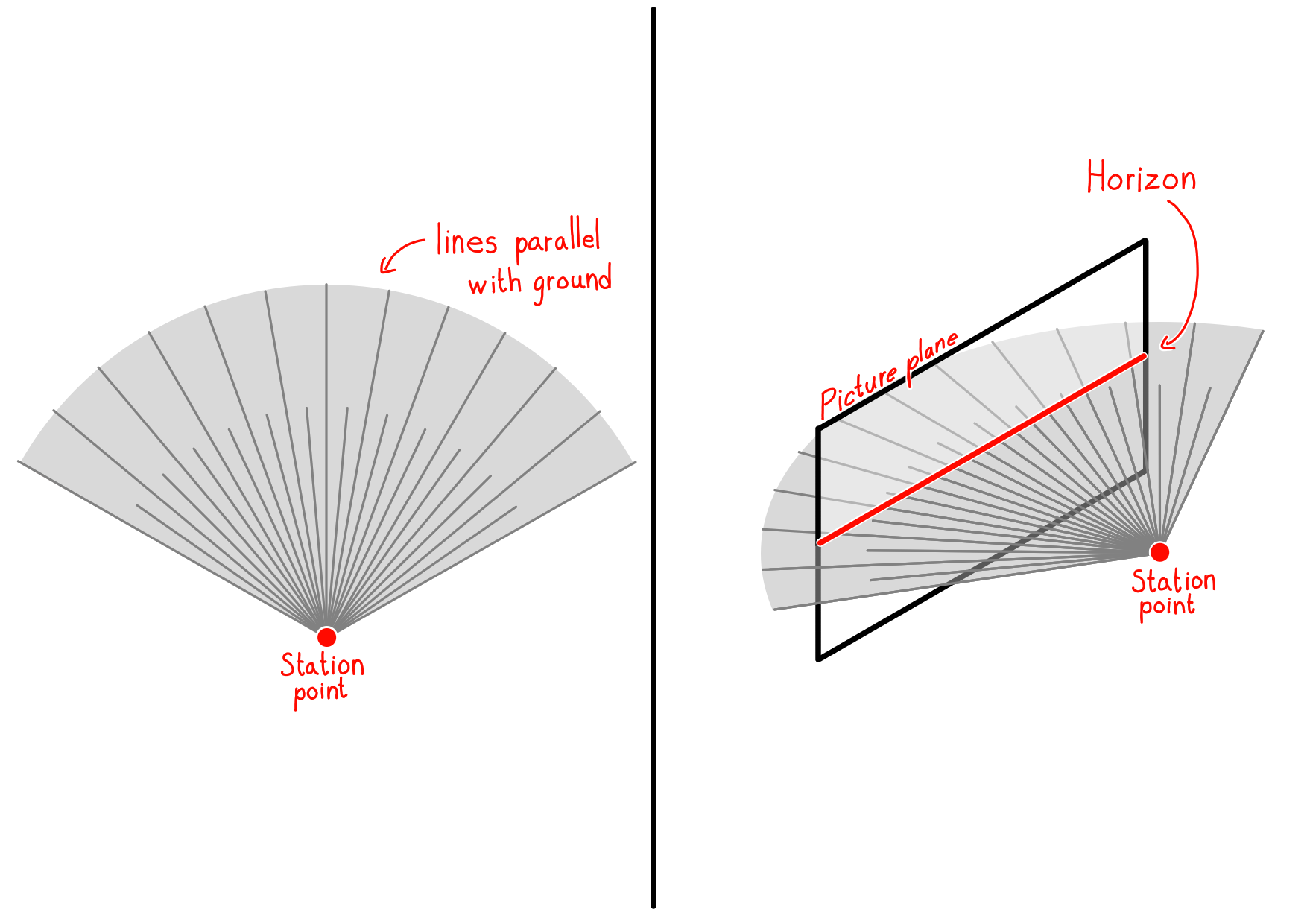
And so. all lines that are parallel with the ground will appear on the same straight line, the horizon.
Looking at this there are a couple of things that we can learn about how the horizon behaves.
First off, if the horizon is the result of drawing lines from our eyes and keeping them parallel with the ground when they move forwards, then the horizon will always be eye level.
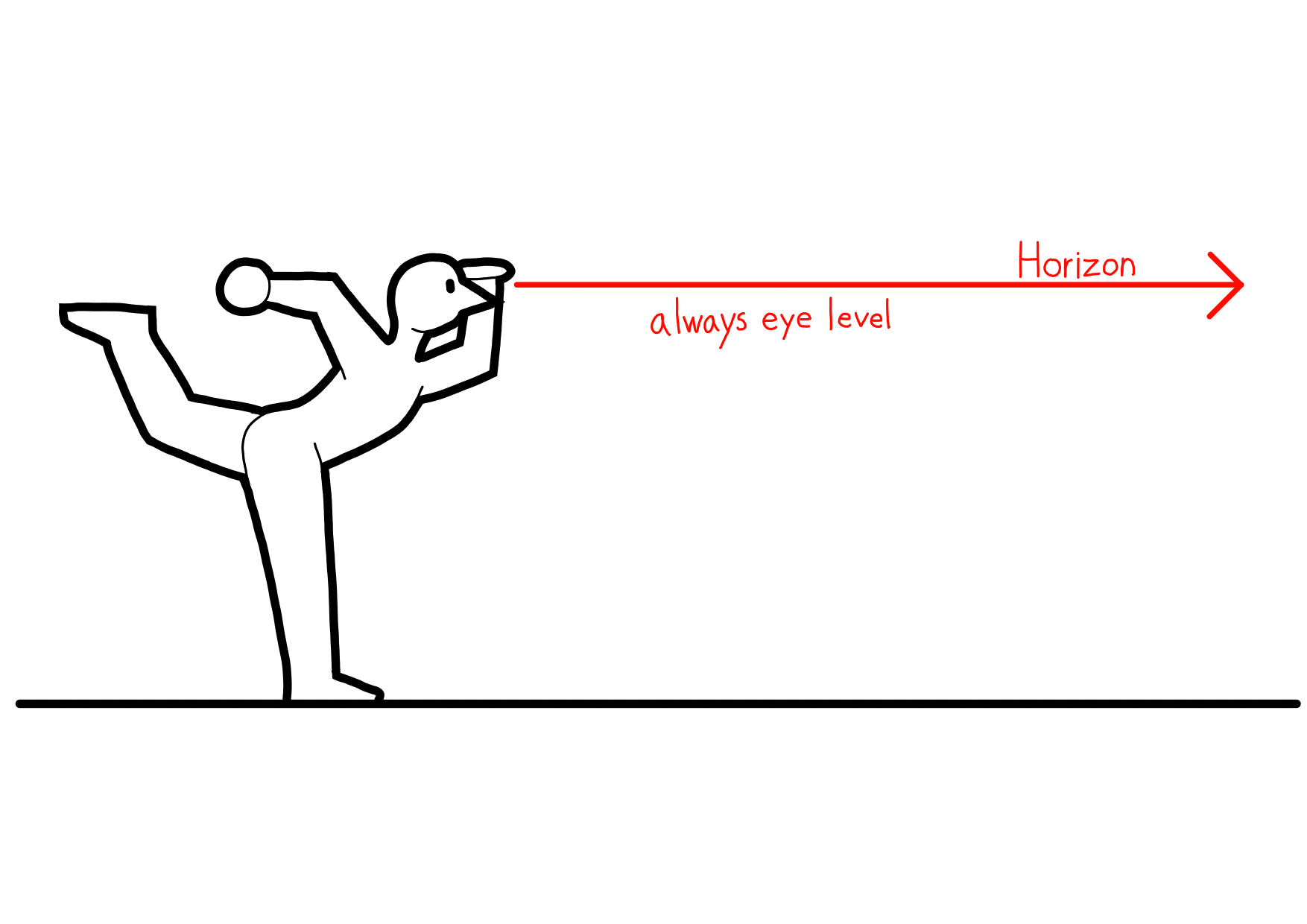
This means that we can use the horizon to determine the height of the camera.
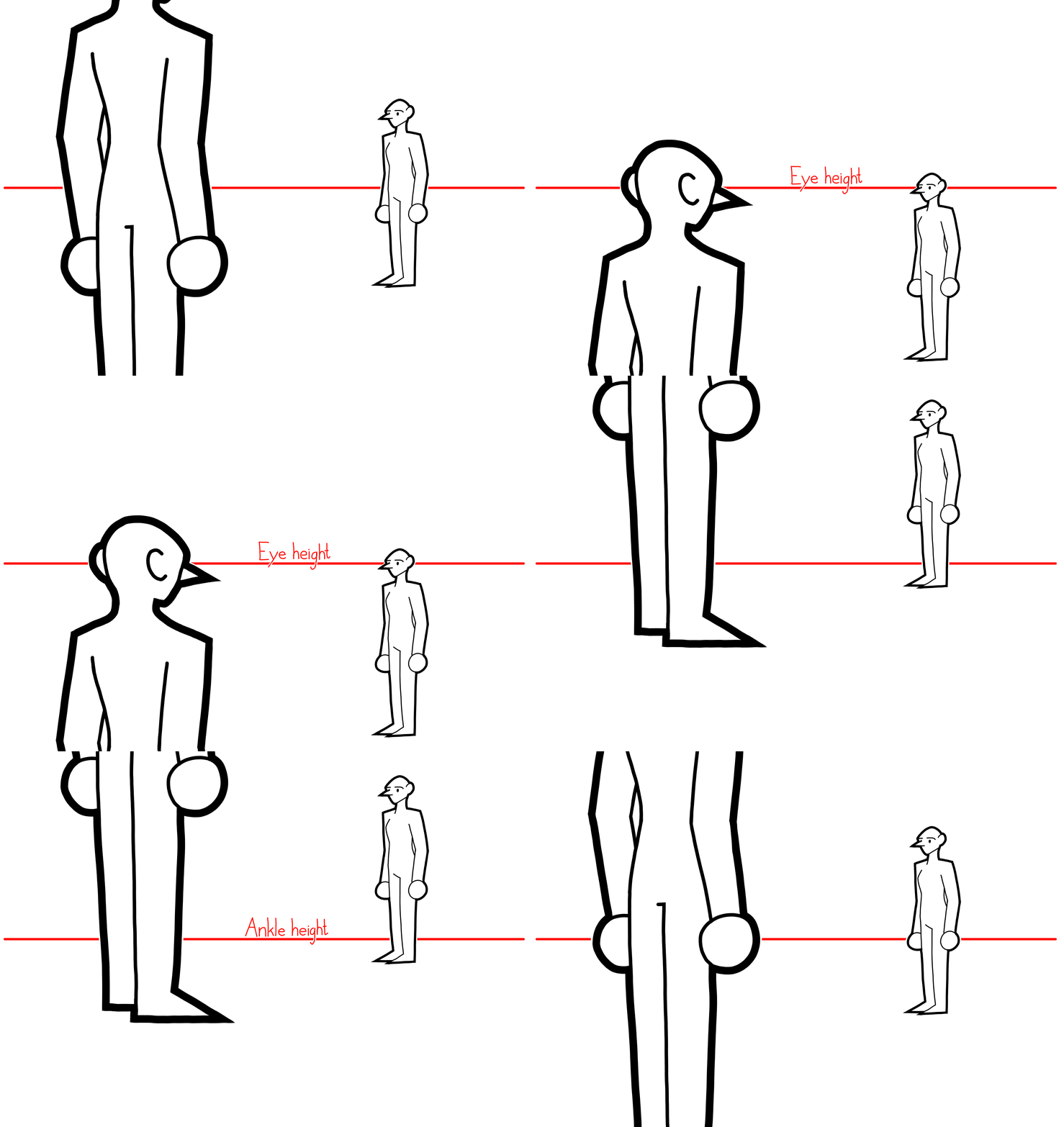
If an object is above the horizon then we are looking up at it. If an object is below the horizon then we are looking down at it. And if an object is on top of the horizon then we are looking straight ahead at it. Just put everything that is at the height of the camera on top of the horizon, and there go.
Another thing we can figure out is that the phenomenon of lines that are parallel with a surface appearing on a straight line doesn't just go for the ground. It goes for any flat surface. Whether it is the side of a wall or simply an incline, if it is a flat plane then all lines that are parallel with it will always have their vanishing points on a straight line.
Any rules you've learned about horizontal surfaces apply to every flat surface regardless of orientation.
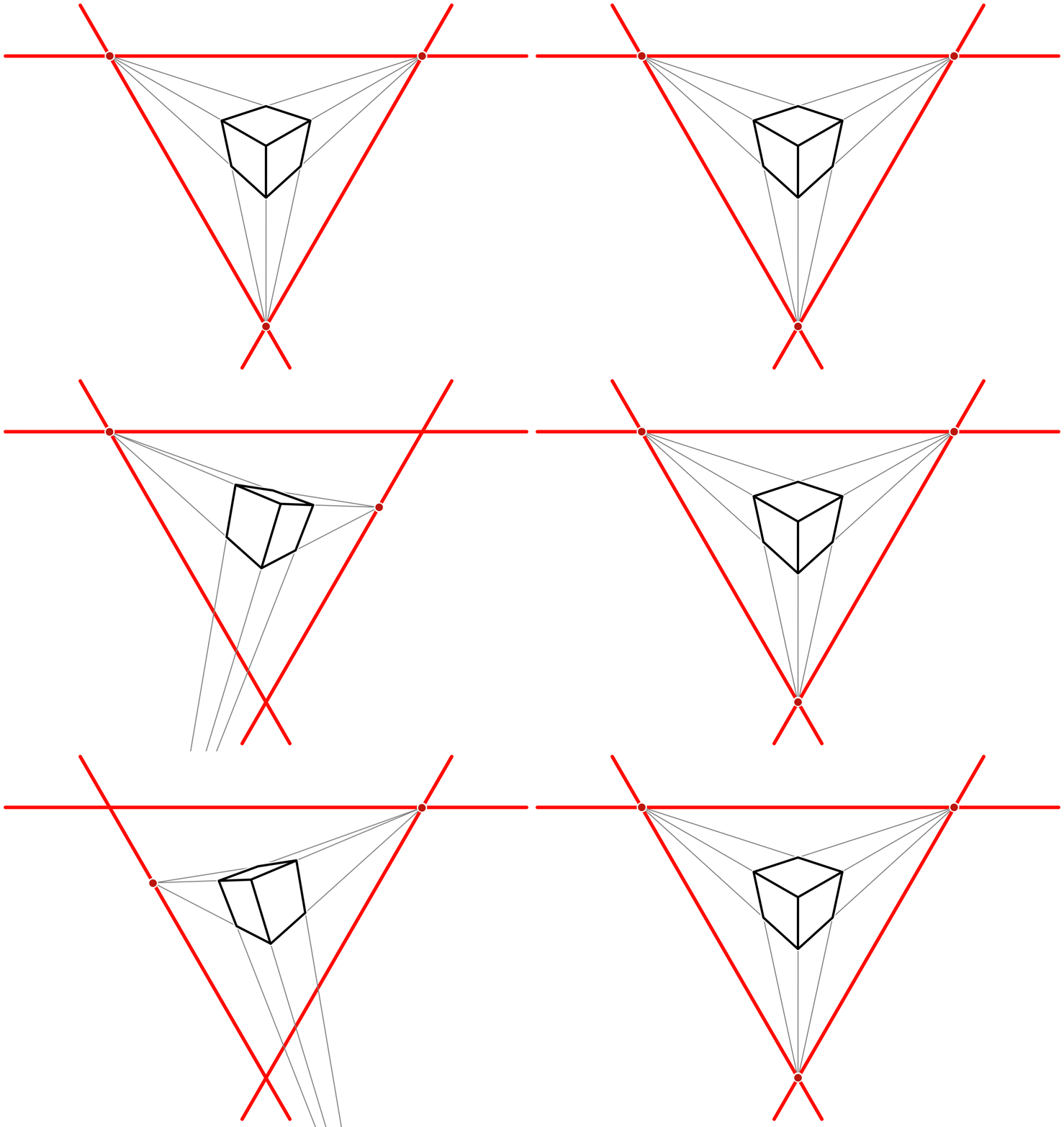
This shouldn't be surprising. After all, mathematically speaking, there is nothing special about up and down. Cubes have rotation symmetry. When looking at them in a vacuum, there is no objective way to determine which face is up. You just have to arbitrarily decide.

I believe that M.C Escher's “relativity” does a good job of demonstrating how you have to look at shapes if you want to understand more advanced perspective. Knowing him, that was probably intentional.
I have previously called these additional lines “vertical horizons”. I have since heard people use the term “vanishing lines” which is what I will be calling them from now on.
If vanishing points can be understood as where you would see straight lines disappear when stretched into infinity, vanishing lines can be understood as how you would see flat surfaces disappear if they were made infinitely big. Every surface has one, the horizon is just the only one we can see in nature.
If you need to find a vanishing point that is not parallel with the ground, finding the “horizon” for a surface it is parallel with can make finding it way easier.
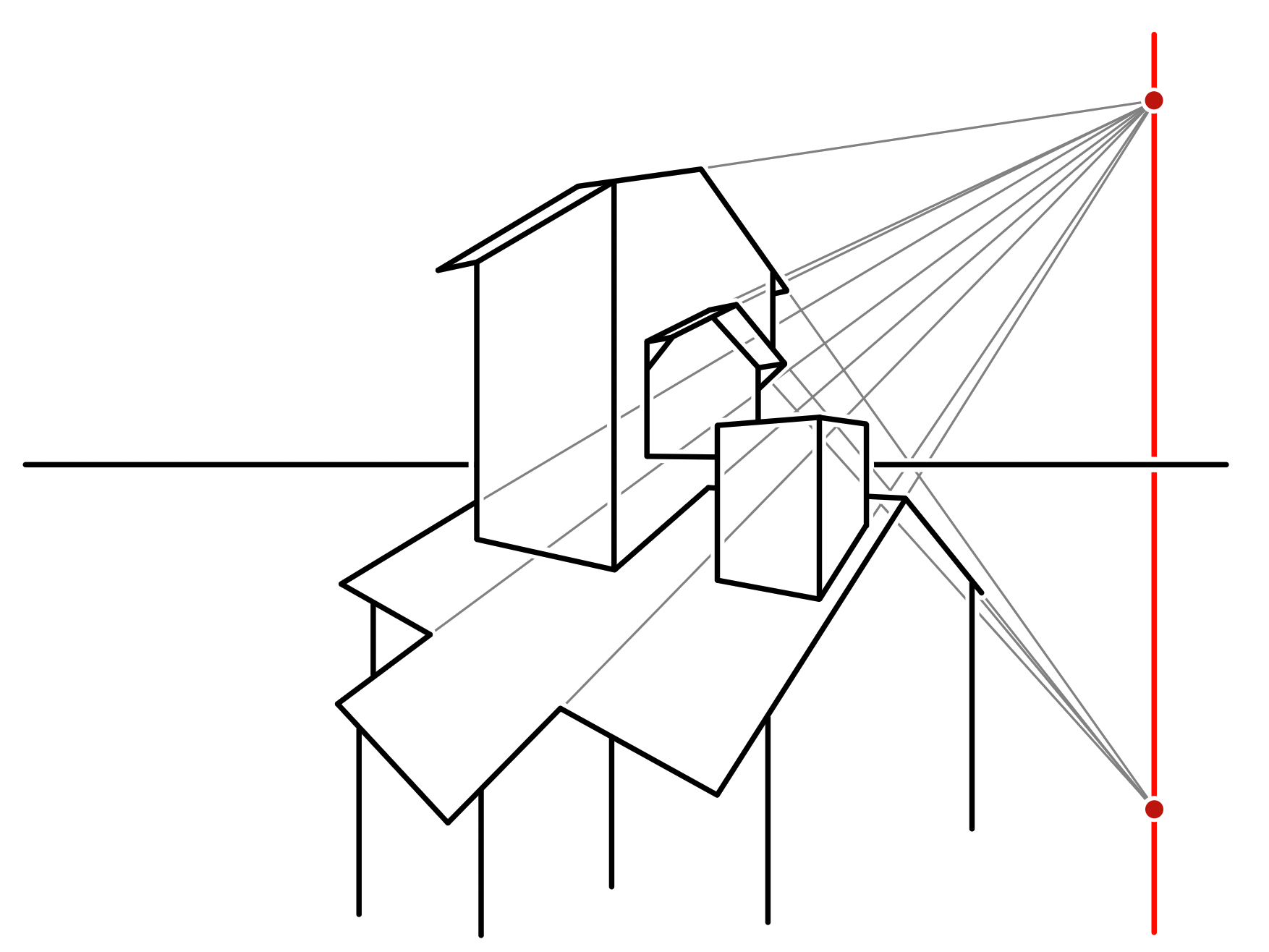
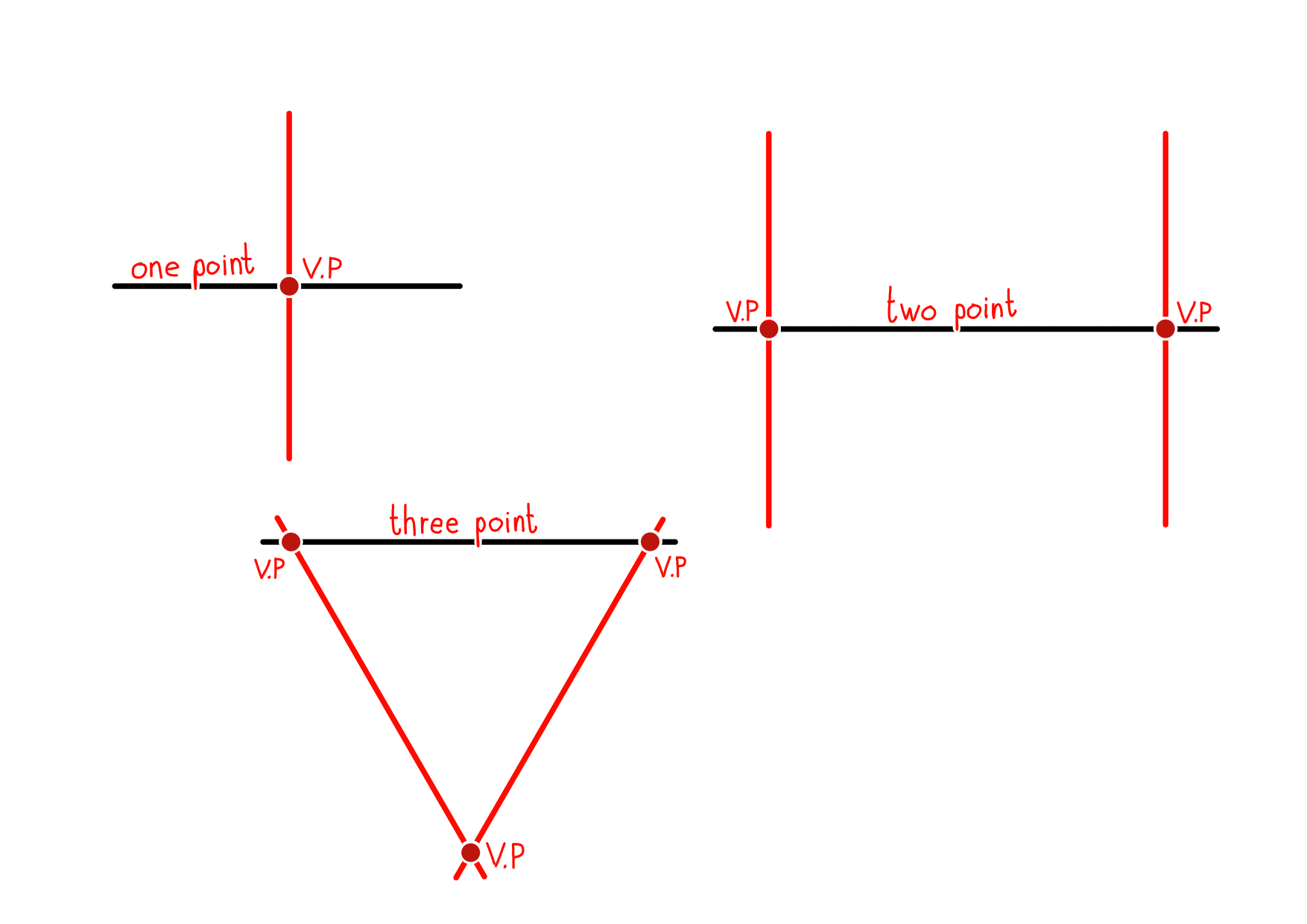
But how do you find these new vanishing lines? Easy, remember, they're just straight lines. All you need for a straight line is one point it crosses over and an angle. And if we have multiple points then we don't even need the angle, we can just draw the line through all of them. Luckily, perspective is filled with points we can use to find these lines. Just find at least two vanishing points for lines that are leveled with that surface, and draw a line across them. If not all lines surrounding a surface have vanishing points, like when you are drawing one or two point perspective, then you'll have to look at the lines that don't have vanishing points, and draw your vanishing line parallel to that. Because the only way that a line could not have a vanishing point is when it is parallel to its vanishing line.
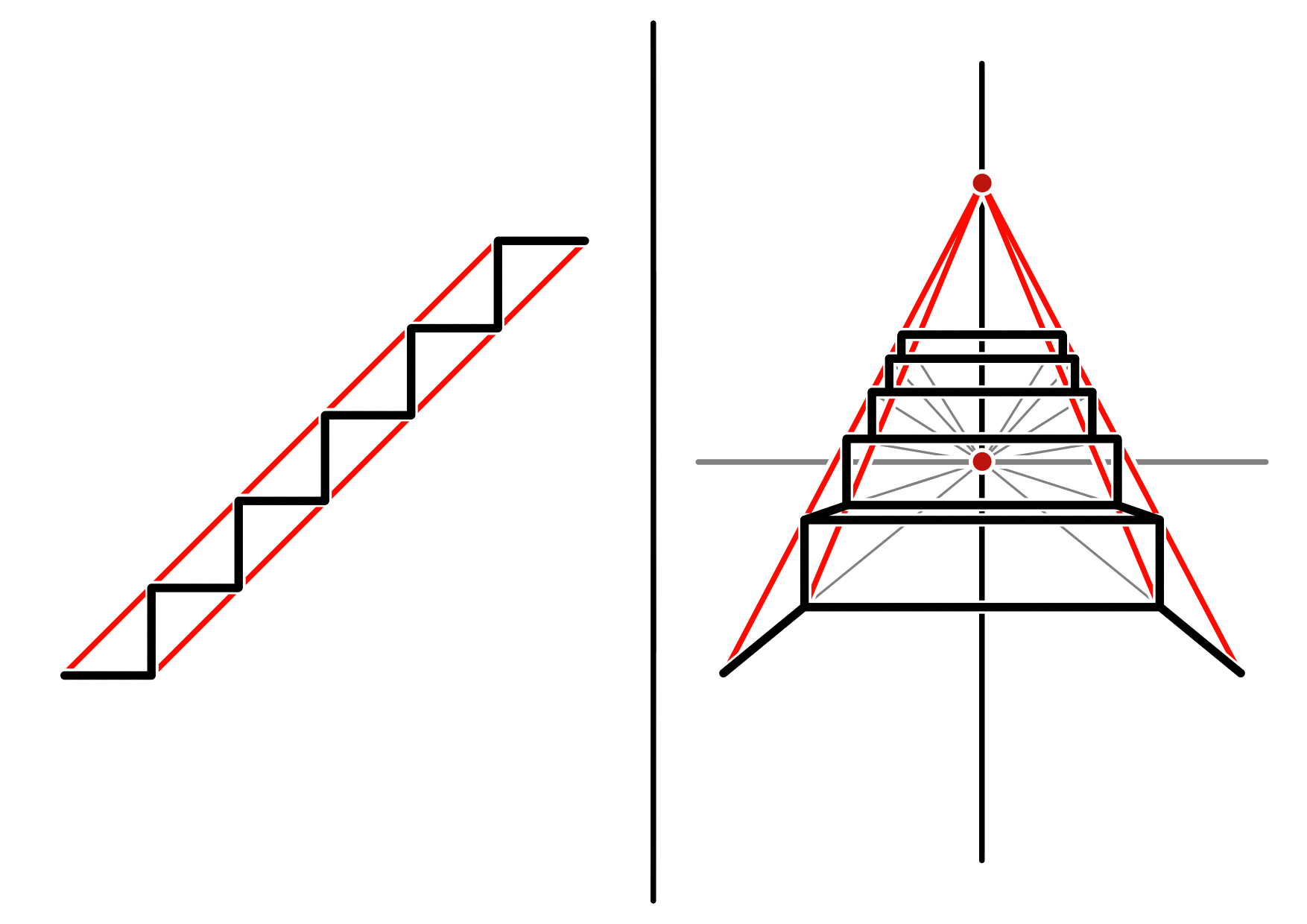
Vanishing lines can be used to draw inclines, which in turn can be used to draw stairs. If you imagine drawing lines through the corners of each step on a staircase, you will get lines resembling an incline. Drawing this incline on your canvas by finding its vanishing point can make drawing the stairs a lot easier.
Once you have found multiple vanishing lines, one thing you can do is look for where they overlap each other. A vanishing point that is on top of two horizons will be parallel with both of their surfaces. This is useful for when you need to draw multiple surfaces intersecting.
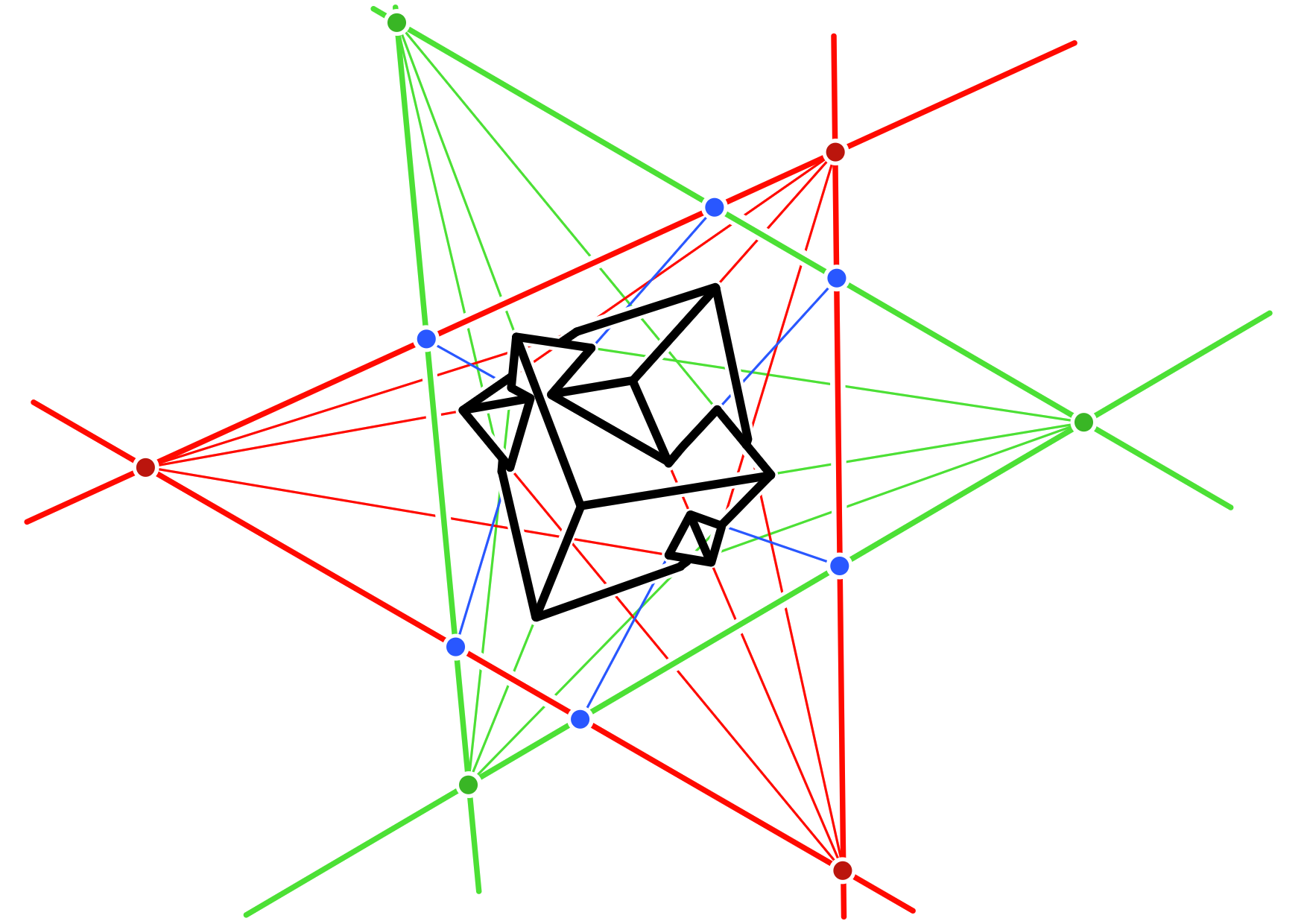
If you imagine a wall and the ground as different surfaces intersecting each other then you can figure out how to draw houses on a slope.
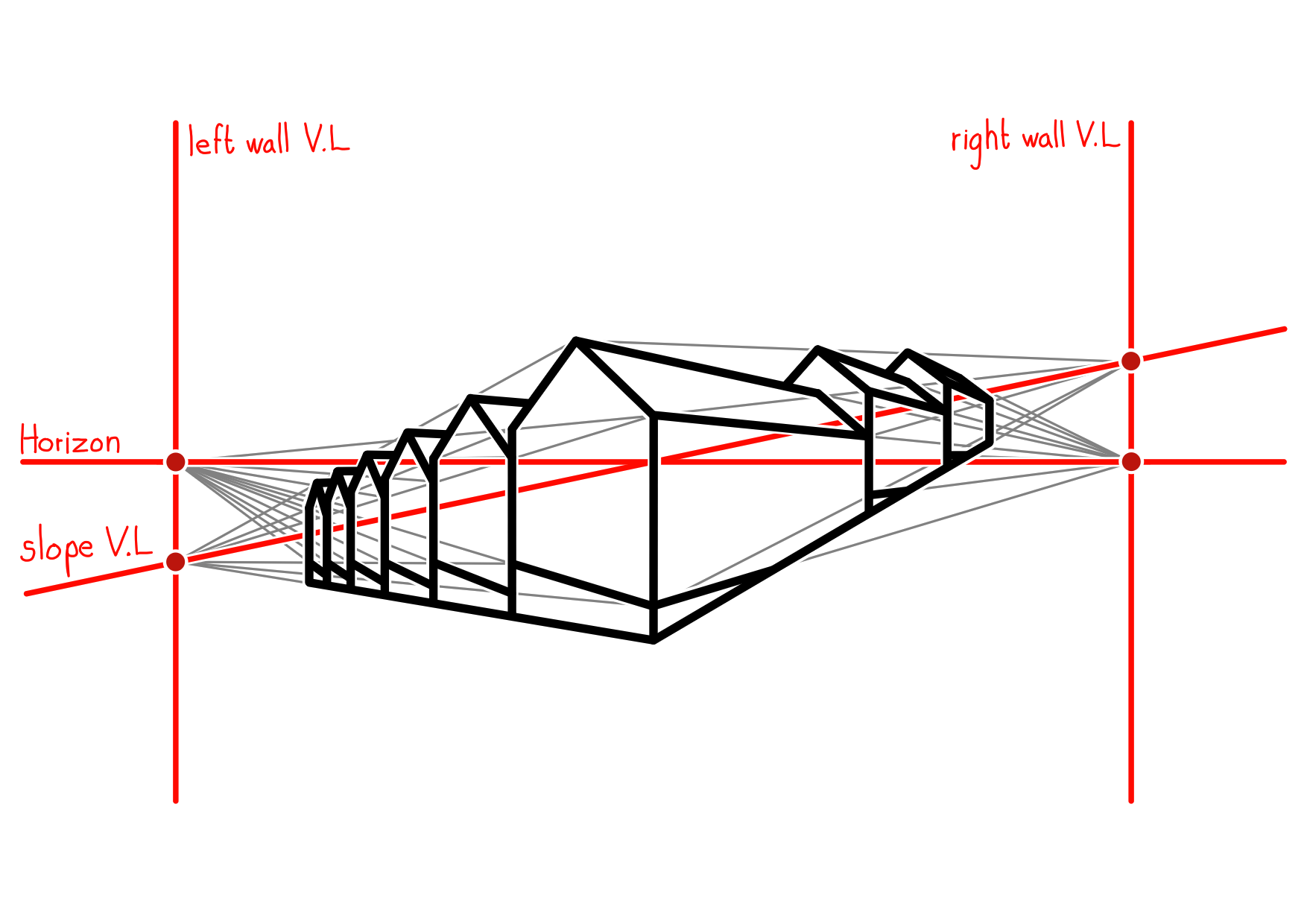
All surfaces are surrounded by multiple lines whose vanishing points can be used to find its vanishing line, and all lines are parallel with multiple surfaces whose vanishing lines can be used to find its vanishing points. This creates a pretty nifty three part equation where if you have two parts, you can easily find the third.
The last thing I want to mention is that the horizon we use in perspective is technically not the one we see in real life. In perspective, we work with distances of infinity. If you use diagonal vanishing points to create a grid, you will notice that no matter how big you make it, it will never reach the horizon. How much the grid grows with each additional square gets smaller and smaller the closer it gets to the horizon, making sure that it always stays slightly short of it. But in real life, when something moves far enough away, it not only meets the horizon, but it will start to move behind it. This is because the horizon we use in perspective assumes an infinitely wide earth, which we don't have in real life. If you want to get technical, the horizon we use in perspective is called the astronomical horizon, whereas the horizon we see in real life is called the true horizon.
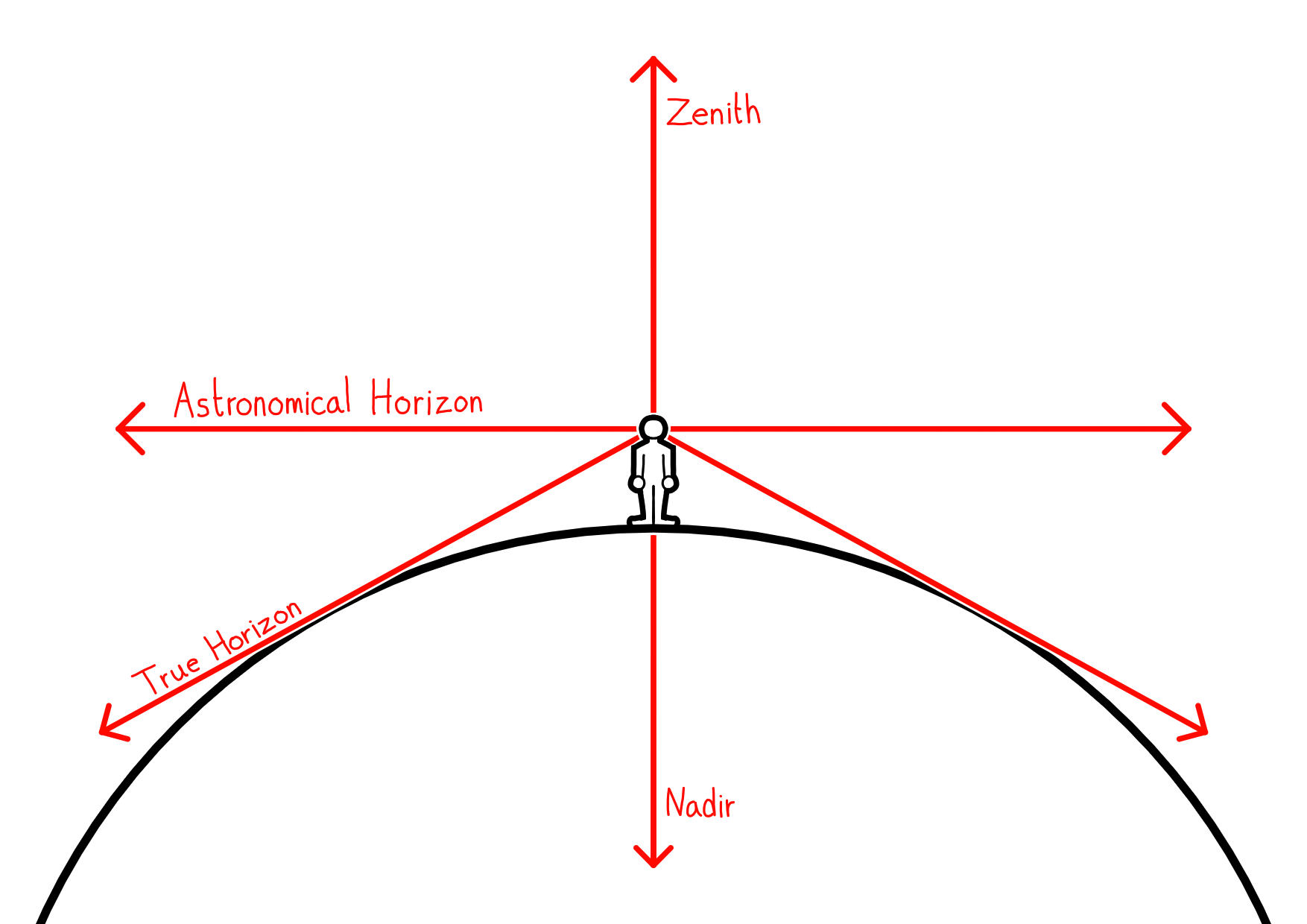
(The zenith and nadir are where you'll see the third vanishing point depending on how the camera is angled)
If something is far enough away, it will start to move beyond the horizon. For an average person standing at sea level, this will be around 4.8 km or 3 miles, but this distance increases fast as you move higher up. Similarly, how far below the astronomical horizon the true horizon will be depends on how high up you are. This distance is usually negligible however.
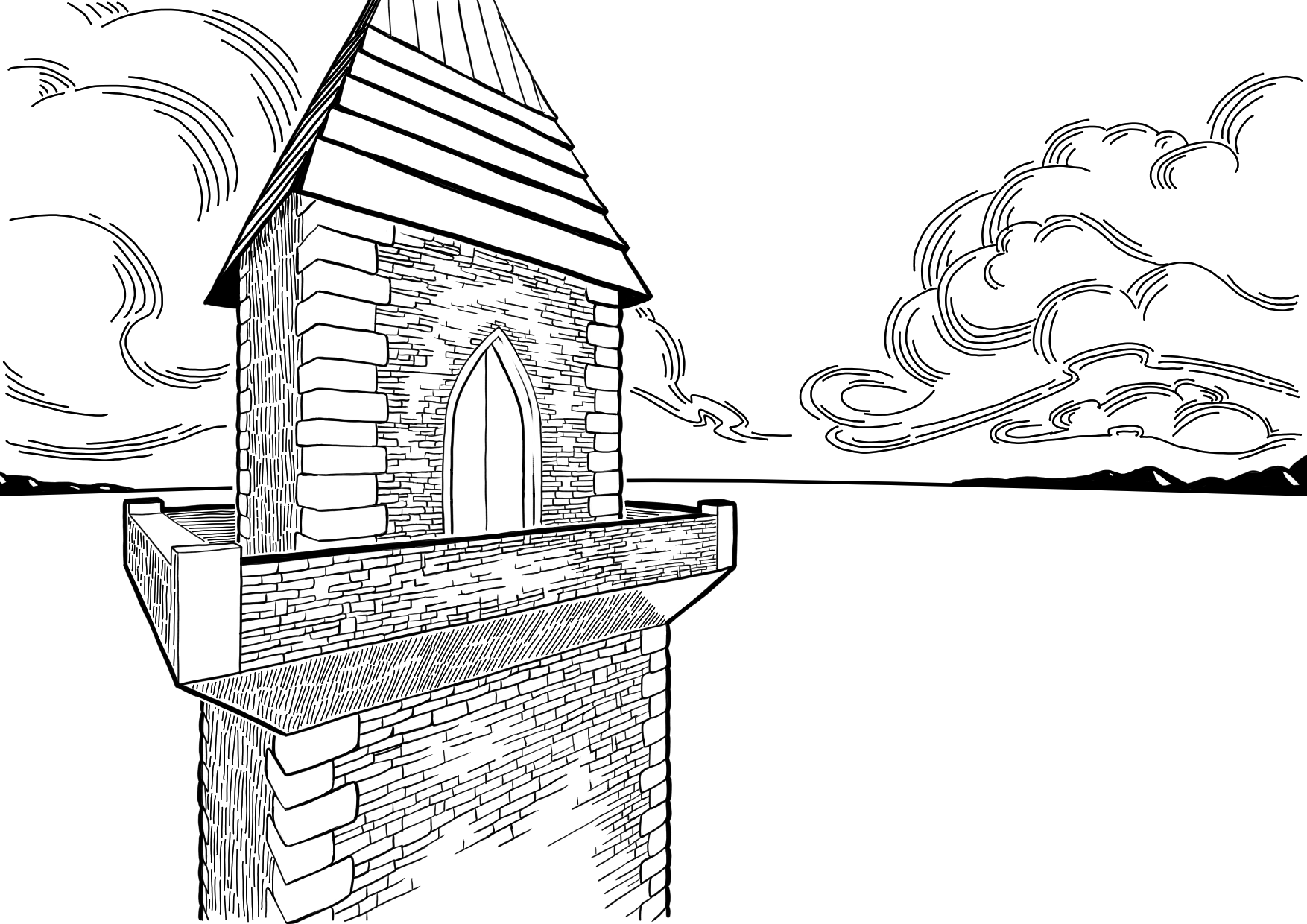
What I am getting at is that the horizon that is part of your final drawing doesn't always have to be the horizon that you use in perspective. If you want to create a sense of distance you can put things behind the horizon, if you want to create a sense of height you can put the true horizon slightly below the astronomical horizon, if you want to create an even greater sense of height you could even curve the horizon making it look more like a hyperbola. Or you could just omit the horizon entirely if you're capturing a scene with low visibility, or if you just don't think it's important.
This concludes the fundamentals.
Back